
National Minority Mental Health Awareness Month: Caring for Mind, Body, and Community

July is National Minority Mental Health Awareness Month, a time to raise awareness about the mental health challenges that affect racial and ethnic minority communities. The CDC observes this month to highlight challenges that affect mental health in minority groups and to encourage support for mental health equity. (CDC)
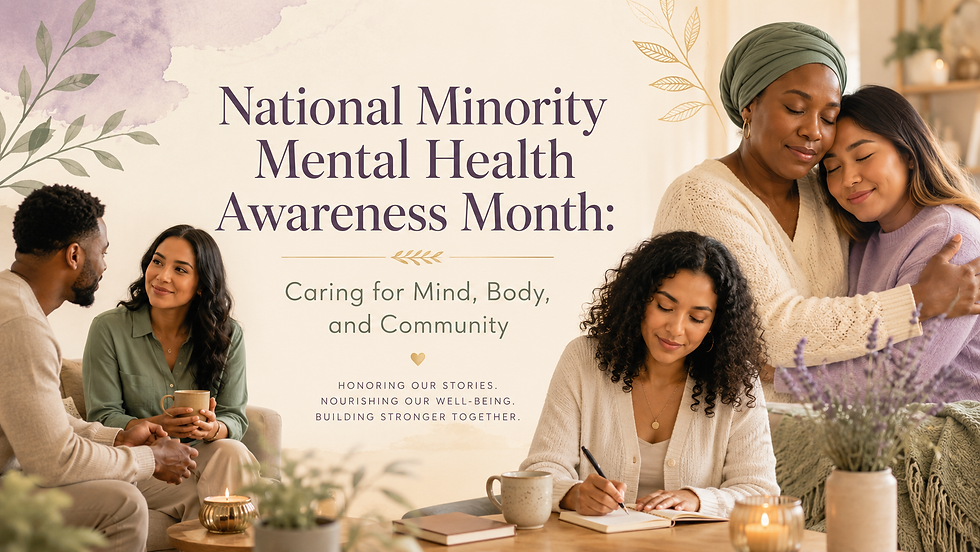
Mental health includes emotional, psychological, and social well-being. It shapes how people think, feel, relate to others, handle stress, make decisions, and care for themselves. For many communities, conversations about mental health can be complicated by stigma, cultural expectations, limited access to care, cost, language barriers, and a shortage of culturally responsive providers.
Research continues to show that disparities exist in mental health care access and quality. A review on the mental health needs of underserved and disenfranchised populations found that minority communities are often strongly affected by treatment gaps and barriers to quality care. (PMC) Another study on racial and ethnic disparities in mental health service utilization reported that disparities in access and delayed mental health care continue to affect marginalized populations. (Springer Link)
These challenges matter because untreated stress, anxiety, depression, grief, and trauma can affect the whole person. Emotional distress may influence sleep, appetite, energy, relationships, immune function, and daily habits. It can also affect how people care for their bodies and skin. When someone is overwhelmed, even basic routines like bathing, moisturizing, drinking water, or resting can feel difficult.
The connection between stress and the body is real. Chronic stress can affect hormones, inflammation, and immune responses. For some people, stress can contribute to skin flare-ups, dryness, itching, acne, or irritation. While skincare is not a substitute for mental health care, a gentle routine can be a small act of comfort and stability during stressful seasons.
For minority communities, care must include compassion and respect. Support should honor lived experiences, cultural background, family history, faith, and community values. Mental health conversations should not shame people for struggling. Instead, they should create space for honesty, healing, and hope.
Faith can also be a meaningful source of support. Prayer, Scripture, worship, and church community can provide comfort and strength. At the same time, seeking counseling, therapy, medical guidance, or crisis support when needed is also wise. Faith and professional care can work together. Asking for help is not a weakness. It can be an act of courage and stewardship.
Daily self-care can support emotional wellness in small but meaningful ways. Resting when possible, spending time outside, journaling, talking with a trusted person, moving the body gently, and creating a calming hygiene routine can help bring structure and peace. A warm shower, a familiar scent, or a natural soap can become a moment to breathe and reset.
Three Angels Soap Company creates products for sensitive and problem-prone skin because we believe care should be gentle. During National Minority Mental Health Awareness Month, we encourage customers to care for the whole person. Mind, body, spirit, and skin all deserve attention.
This is also a month to check on others. Ask someone how they are doing and take time to listen. Encourage a loved one to seek support if they are struggling. Share resources when appropriate. Be patient with people who are carrying more than they show.
Communities become healthier when compassion is practiced. Churches, families, businesses, and neighborhoods can all play a role in reducing stigma and encouraging care. We can remind one another that rest is not selfish, healing takes time, and every person is made with dignity.
Mental health awareness should lead to action. Learn the signs of emotional distress. Support culturally responsive care. Encourage open conversations. Pray for those who feel unseen. Offer practical help when someone is overwhelmed.
This July, let us honor National Minority Mental Health Awareness Month with tenderness, wisdom, and love. Mental health matters. Access matters. Representation matters. Peace matters. And every person deserves care that recognizes their full humanity.
References
The CDC recognizes National Minority Mental Health Awareness Month as a July observance focused on challenges affecting the mental health of minority groups. (CDC)
Research on mental health care gaps shows that minority populations are often strongly affected by barriers to access and quality care. (PMC)
Research on racial and ethnic disparities in mental health care utilization has found continuing disparities in access and delayed care among marginalized populations. (Springer Link)
A 2025 study in JAMA Network Open found substantial racial and ethnic differences in adolescent mental health service use after the COVID-19 pandemic, highlighting the need to improve access for minority populations. (jamanetwork.com)


Comments